Tactile Graphics for Visitor Centers & Parks
Visitor centers, parks, botanical gardens, nature centers, zoos, aquariums, and historic sites welcome visitors of all ages and abilities. As accessibility continues to play an increasingly important role in public spaces, tactile graphics help make visual information available through touch for visitors who are blind or visually impaired.
From orientation maps and interpretive displays to educational exhibits and trail information, tactile graphics support more inclusive visitor experiences while complementing braille, audio, large print, and digital accessibility resources.
This article explores common applications for tactile graphics in visitor centers and parks. It is not intended to establish accessibility standards or replace guidance provided by accessibility professionals, park authorities, exhibit designers, or interpretive specialists.
Accessible Visitor Information
Visitor centers often provide maps, exhibits, educational displays, brochures, and orientation materials that help guests understand the surrounding environment. Tactile graphics make many of these visual resources more accessible by presenting information in raised tactile formats.
Common applications include:
- Orientation maps
- Trail information
- Facility layouts
- Educational displays
- Interpretive exhibits
- Visitor guides
Park and Trail Maps
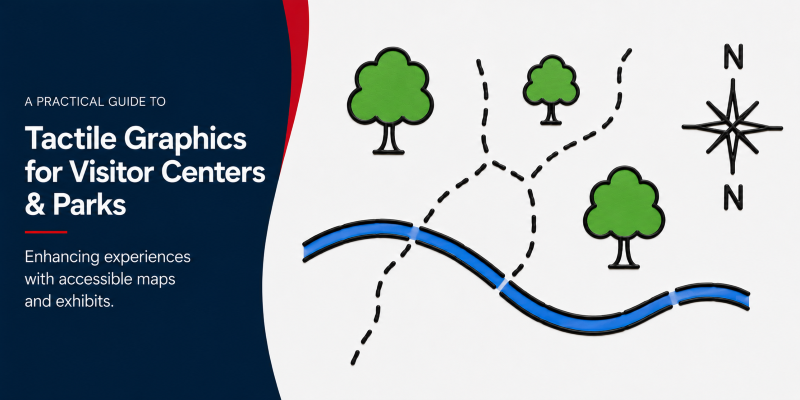
Parks and recreational facilities frequently use maps to help visitors understand trails, landmarks, buildings, viewpoints, picnic areas, campgrounds, and other points of interest. Tactile maps provide another way for visitors to explore these environments through touch before beginning their visit.
These resources often complement braille signage, accessible digital information, and traditional printed maps.
Learn more in Tactile Maps and Wayfinding.
Interpretive Exhibits
Interpretive displays help explain the history, geology, wildlife, ecology, and cultural significance of parks and public spaces. Tactile graphics can make selected illustrations, diagrams, and educational content accessible while encouraging visitors to engage more fully with exhibits.
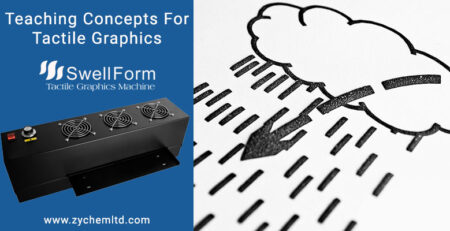
Many organizations create these materials using Swell Touch paper processed through a Swell Form Machine, allowing exhibits to be updated efficiently as information changes.
Historic Sites and Cultural Attractions
Historic buildings, monuments, archaeological sites, and cultural attractions often rely on visual displays to tell their stories. Tactile graphics can help communicate architectural details, historical layouts, timelines, artifacts, and other information that may otherwise be difficult to access without sight.
Organizations producing larger quantities of visitor guides, educational handouts, or exhibit materials may also benefit from the increased production capacity of the Swell Form Pro Machine.
Educational Programs
Many parks and visitor centers offer educational programs for schools, families, community groups, and tourists. Tactile graphics can support these programs by making maps, diagrams, wildlife illustrations, environmental graphics, and educational activities more accessible.
For workshops, demonstrations, or hands-on activities, Swell Touch Markers allow educators and staff to draw directly onto Swell Touch paper before processing through a Swell Form Machine.
Seasonal and Temporary Information
Visitor centers frequently update exhibits, trail information, seasonal displays, and educational materials throughout the year. Heat-activated tactile graphics allow organizations to create or revise accessible materials without maintaining large inventories of pre-produced resources.
This flexibility is particularly valuable when exhibits change regularly or temporary events require updated visitor information.
Supporting Accessibility
Tactile graphics are one component of an inclusive visitor experience. They are often used alongside braille, accessible signage, audio interpretation, accessible websites, and other accessibility features to help visitors engage with public spaces more independently.
The design and implementation of tactile materials should always be guided by qualified accessibility professionals and the specific needs of the intended audience.
Producing Tactile Graphics for Visitor Centers
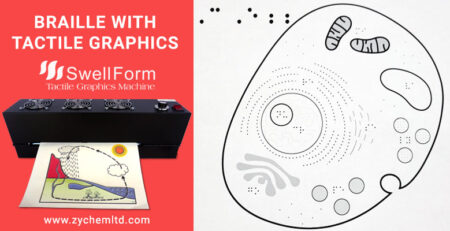
Heat-activated tactile graphics provide an efficient method for producing accessible visitor materials. Printed or hand-drawn black areas expand when processed through a Swell Form Machine, creating raised tactile graphics while preserving color for visual reference.
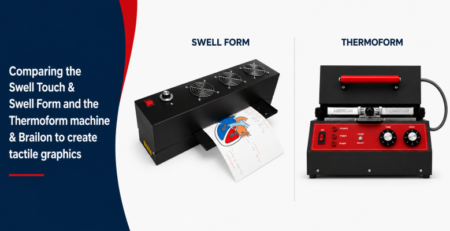
Whether creating a single exhibit map or producing larger quantities of educational resources, organizations can select the Swell Form Machine or the Swell Form Pro Machine based on their production requirements.
Zychem’s Role
Zychem manufactures the equipment and materials used to produce heat-activated tactile graphics, including Swell Touch paper, the Swell Form Machine, the Swell Form Pro Machine, and Swell Touch Markers.
While Zychem provides the technology used to create tactile graphics, decisions regarding exhibit planning, visitor accessibility, interpretive content, and accessibility compliance should always be made by qualified professionals and the organizations responsible for each site.
Learn More
Continue exploring tactile graphics by reading Applications of Tactile Graphics, Tactile Graphics for Museums, Tactile Maps and Wayfinding, Tactile Graphics for Government & Public Services, Tactile Graphics in Education, Tactile Graphics for STEM Education, What Is Swell Touch Paper?, and What Is a Swell Form Machine?.
Conclusion
Tactile graphics help visitor centers, parks, and cultural attractions create more accessible experiences through maps, exhibits, educational materials, and interpretive displays. By making visual information available through touch, organizations can better serve visitors who are blind or visually impaired while supporting broader accessibility initiatives.