Examples of Tactile Graphics for the Classroom
Tactile graphics play a critical role in ensuring that students who are blind or visually impaired receive a comprehensive and inclusive education. Traditional visual aids such as charts, illustrations, and graphics are often not accessible, but tactile graphics provide a way to represent this information in a format that can be understood through touch.
By incorporating tactile graphics into the classroom, educators can provide equal access to information and help students better understand and engage with the material being taught. Tactile graphics also support the development of spatial awareness, problem-solving skills, and independent learning.
One of the key advantages of tactile graphics is their versatility. They can be used across nearly every subject area, from science and mathematics to history and the arts.
Below are ten practical examples of tactile graphics that can be used in the classroom.
1. United States Map
A map with raised outlines of each state, along with major rivers and mountain ranges, helps students understand geography and spatial relationships.
2. Graphs and Data Charts
Raised lines and dots can represent data points, making charts and graphs accessible for interpreting trends and comparisons.
3. Human Body Graphics
Tactile graphics of the human body with labeled organs and systems help students understand anatomy and biological processes.
4. Cell Structure Graphics
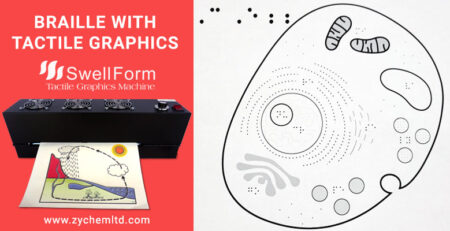
Plant and animal cell graphics with raised labels allow students to explore cell components and their functions.
5. Periodic Table
A tactile version of the periodic table with raised symbols and atomic numbers makes chemistry concepts more accessible.
6. Building Layouts
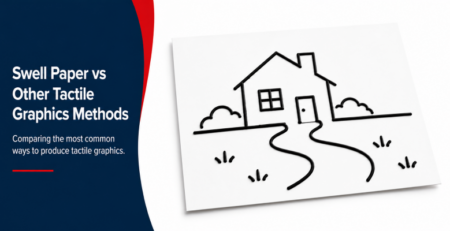
Raised graphics of buildings or floor plans help students understand structure, layout, and navigation.
7. Simple Machines
Tactile graphics showing levers, pulleys, and other simple machines help explain how mechanical systems work.
8. Musical Instruments
Graphics of instruments with labeled parts provide insight into how sound is produced and how instruments are played.
9. Vehicles and Transportation
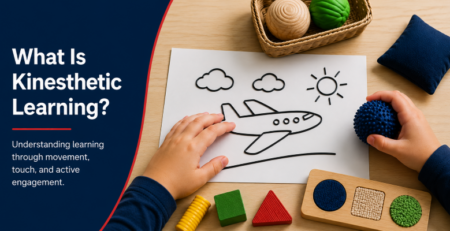
Raised graphics of vehicles such as cars or airplanes help explain how different systems function.
10. Historical Artifacts
Tactile representations of artifacts, such as tools or pottery, provide context and enhance understanding of history and culture.
Tactile graphics can be created for virtually any subject and adapted to different learning levels. They allow students to access concepts that would otherwise be presented visually, helping bridge the gap between visual and tactile learning.
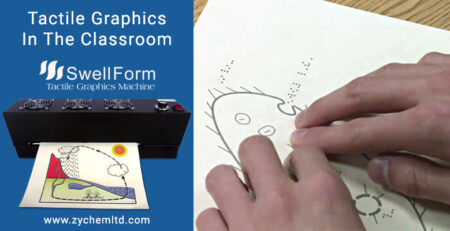
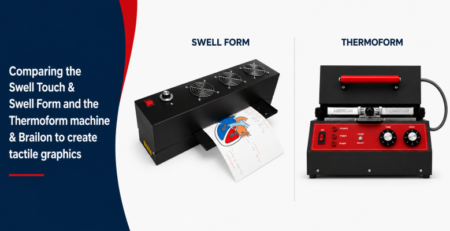
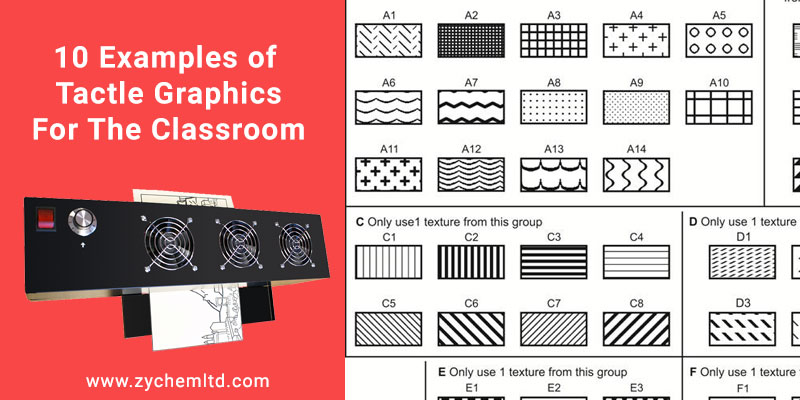
Today, educators can create these materials quickly and efficiently using Swell Touch paper. By printing black ink graphics and processing them through a Swell Form machine, the printed areas expand to create clear, consistent tactile graphics on demand.
Conclusion
Tactile graphics are an essential tool for inclusive education, enabling students who are blind or visually impaired to fully engage with classroom content. By using tools like swell paper and Swell Form machines, educators can create effective tactile learning materials quickly and consistently.
With the right tools and resources, tactile graphics can transform how information is delivered, making education more accessible, engaging, and impactful for all learners.