Tactile Graphics in Workplace Training
Accessible workplace training helps employees understand procedures, equipment, facilities, and safety information regardless of their level of vision. While training often includes verbal instruction, braille, large print, digital accessibility, and hands-on learning, tactile graphics provide another way to communicate visual information through touch.
Employers, vocational training programs, government agencies, manufacturers, rehabilitation organizations, and educational institutions may all use tactile graphics to improve access to diagrams, facility maps, instructional materials, and workplace documentation for employees and trainees who are blind or visually impaired.
This article explores how tactile graphics are used in workplace training. It is not intended to establish workplace safety standards, accessibility regulations, or training requirements.
Supporting Accessible Training
Many workplace training programs rely on visual materials to explain equipment, procedures, workflows, and facility layouts. Tactile graphics can make selected visual information more accessible while complementing braille, verbal instruction, accessible digital resources, and practical demonstrations.
Common workplace materials include:
- Safety diagrams
- Facility maps
- Equipment illustrations
- Training manuals
- Workflow diagrams
- Emergency information
Vocational Training
Vocational schools, rehabilitation programs, and workforce development organizations often prepare students for careers across many industries. Tactile graphics may accompany instructional materials, classroom exercises, equipment diagrams, and workplace orientation resources that help learners understand visual information through touch.
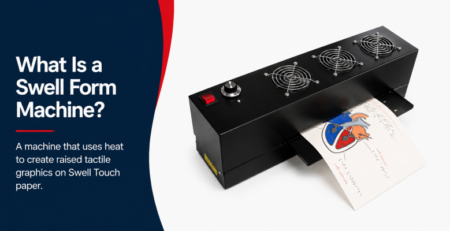
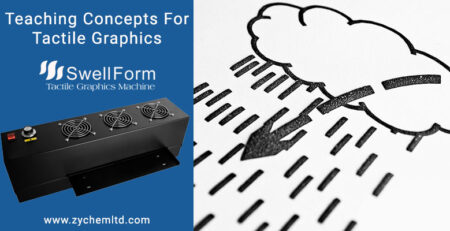
Many organizations produce these materials using Swell Touch paper processed through a Swell Form Machine, allowing materials to be updated as training programs evolve.
Manufacturing and Industrial Training
Manufacturing companies often use diagrams, process illustrations, equipment layouts, and facility maps when training employees. Tactile graphics can help make selected visual information more accessible while supporting onboarding, continuing education, and workplace instruction.
Organizations producing larger quantities of training manuals, instructional materials, or educational resources may also benefit from the increased production capacity of the Swell Form Pro Machine.
Safety and Emergency Preparedness
Safety information is an important component of workplace training. Depending on the application, tactile graphics may be used to accompany evacuation maps, emergency procedures, facility layouts, and instructional materials developed by qualified safety professionals.
The development of workplace safety materials should always follow applicable regulations and organizational requirements.
Facility Orientation
New employees, trainees, and visitors may benefit from tactile maps that explain building layouts, departments, meeting rooms, entrances, exits, and other important locations. These materials can complement braille signage, accessible digital resources, and other accessibility features throughout a facility.
Learn more in Tactile Maps and Wayfinding.
Hands-On Learning
Many workplace training programs include practical demonstrations and hands-on instruction. For customized diagrams, demonstrations, or classroom exercises, Swell Touch Markers allow graphics to be drawn directly onto Swell Touch paper before processing through a Swell Form Machine.
Producing Workplace Training Materials
Heat-activated tactile graphics provide an efficient way to produce accessible workplace materials. Printed or hand-drawn black areas expand when processed through a Swell Form Machine, creating raised tactile graphics while preserving color for visual reference.
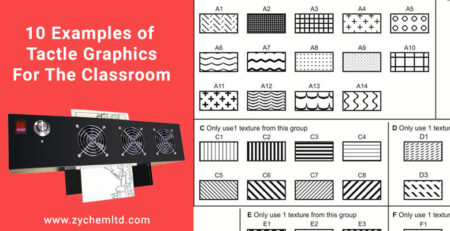
Organizations can choose the Swell Form Machine for on-demand production or the Swell Form Pro Machine when larger quantities of training materials are required.
Zychem’s Role
Zychem manufactures the equipment and materials used to produce heat-activated tactile graphics, including Swell Touch paper, the Swell Form Machine, the Swell Form Pro Machine, and Swell Touch Markers.
While Zychem supplies the technology used to create tactile graphics, decisions regarding workplace training, safety programs, accessibility compliance, and employee education should always be made by qualified professionals and the organizations responsible for those programs.
Learn More
Continue exploring tactile graphics by reading Applications of Tactile Graphics, Tactile Graphics in Education, Tactile Graphics for STEM Education, Tactile Graphics in Libraries, Tactile Graphics in Healthcare, Tactile Graphics for Government & Public Services, Tactile Graphics for Visitor Centers & Parks, Tactile Graphics for Museums, Tactile Maps and Wayfinding, What Is Swell Touch Paper?, and What Is a Swell Form Machine?.
Conclusion
Tactile graphics help make workplace training more accessible by supporting diagrams, facility maps, instructional materials, and safety resources. As employers and organizations continue expanding accessibility, dependable tactile graphics technology provides an efficient way to produce high-quality training materials that improve access to visual information through touch.