Tactile Graphics in Libraries
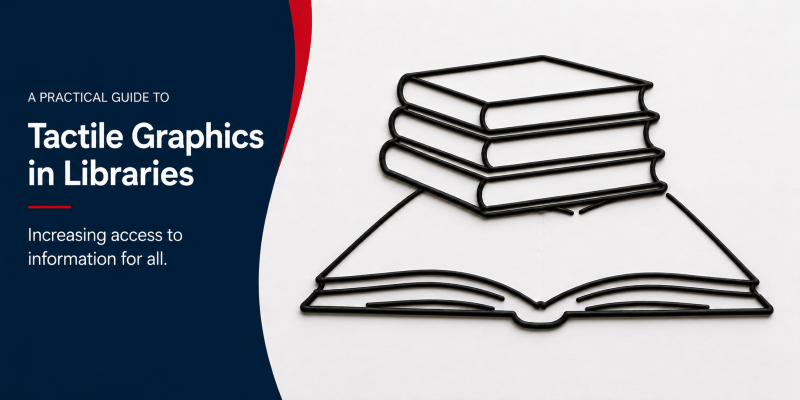
Libraries have long played an important role in providing equal access to information for their communities. In addition to braille books, audiobooks, large-print materials, and digital accessibility resources, many libraries also use tactile graphics to make visual information more accessible for people who are blind or visually impaired.
Tactile graphics help represent maps, diagrams, illustrations, educational materials, and informational displays in raised formats that can be explored through touch. Public libraries, school libraries, university libraries, and specialized resource centers all use tactile graphics to support learning, accessibility, and community engagement.
This article explores how tactile graphics are used in libraries and information centers. It is not intended to establish accessibility standards or replace guidance from librarians, accessibility professionals, or organizations specializing in library services.
Accessible Learning Resources
Libraries support learners of all ages. Tactile graphics may accompany books, educational handouts, classroom resources, STEM activities, and independent learning materials to provide greater access to visual information.
These materials are often used alongside braille, audio, large print, and accessible digital resources to support a wide variety of learning styles and accessibility needs.
School Libraries
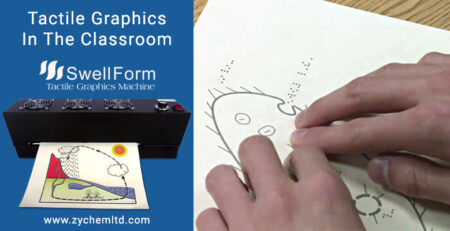
School libraries frequently work with teachers and accessibility staff to provide inclusive learning materials for students. Tactile graphics may support classroom instruction in geography, mathematics, science, history, and many other subjects by making diagrams, maps, charts, and illustrations available in tactile formats.
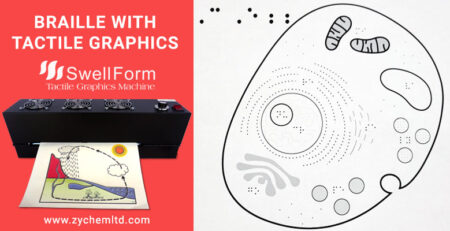
Many schools create these materials using Swell Touch paper processed through a Swell Form Machine, allowing new resources to be produced quickly as classroom needs change.
University Libraries
Colleges and universities increasingly provide accessible course materials through library services and disability resource offices. Tactile graphics may accompany textbooks, research materials, laboratory manuals, presentations, and educational publications across a wide range of academic disciplines.
Depending on production requirements, universities may use either the Swell Form Machine for on-demand production or the Swell Form Pro Machine when producing larger quantities of accessible materials.
Community Programs
Many public libraries offer educational workshops, children’s programs, accessibility events, and community learning opportunities. Tactile graphics can support these activities by making diagrams, artwork, maps, and educational materials more accessible to participants.
For workshops or creative activities, Swell Touch Markers allow users to draw directly onto Swell Touch paper before processing through a Swell Form Machine.
Local History and Exhibits
Libraries often display local history collections, historical photographs, maps, community exhibits, and educational displays. Tactile graphics can complement these exhibits by making selected visual information accessible through touch while supporting inclusive public programming.
Libraries collaborating with museums, archives, or historical societies may also use tactile graphics for temporary exhibitions and community events.
Maps and Wayfinding
Some libraries use tactile maps to help visitors understand building layouts, service areas, meeting rooms, study spaces, entrances, and other public facilities. These maps can complement braille signage and other accessibility features throughout the building.
Learn more in Tactile Maps and Wayfinding.
Producing Library Materials
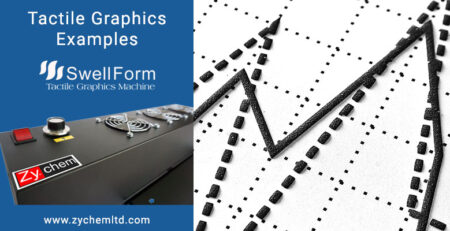
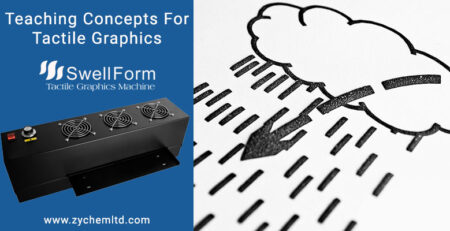
Heat-activated tactile graphics allow libraries to produce accessible materials as collections and programs evolve. Using Swell Touch paper with a Swell Form Machine allows diagrams, maps, illustrations, and educational resources to be created on demand without maintaining large inventories of pre-produced materials.
Organizations with higher production requirements may choose the Swell Form Pro Machine to increase output while maintaining consistent tactile quality.
Zychem’s Role
Zychem manufactures the equipment and materials used to produce heat-activated tactile graphics, including Swell Touch paper, the Swell Form Machine, the Swell Form Pro Machine, and Swell Touch Markers.
While Zychem provides the technology used by libraries and accessibility organizations worldwide, decisions regarding library services, educational programming, accessibility standards, and public resources should always be made by qualified professionals.
Learn More
Continue exploring tactile graphics by reading Applications of Tactile Graphics, Tactile Graphics in Education, Tactile Graphics for STEM Education, Tactile Graphics for Museums, Tactile Maps and Wayfinding, What Is Swell Touch Paper?, and What Is a Swell Form Machine?.
Conclusion
Tactile graphics help libraries expand access to educational materials, exhibits, maps, and community resources for people who are blind or visually impaired. As libraries continue supporting inclusive learning and lifelong education, dependable tactile graphics technology provides an efficient way to create accessible materials that serve diverse communities.