Swell Paper vs Other Tactile Graphics Methods
Creating tactile graphics can be achieved through a variety of methods, each with its own advantages depending on the application, environment, and volume required.
Understanding these methods helps educators, transcribers, and organizations choose the most effective approach for producing tactile graphics that are clear, consistent, and accessible.
What Is Swell Paper
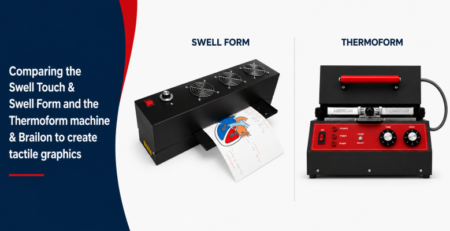
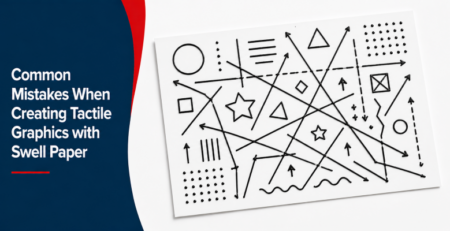
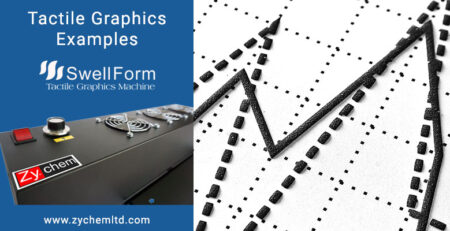
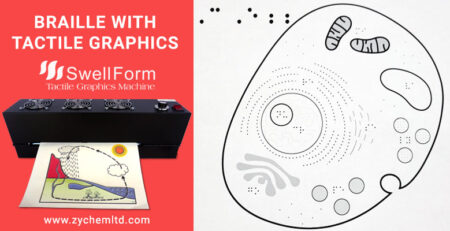
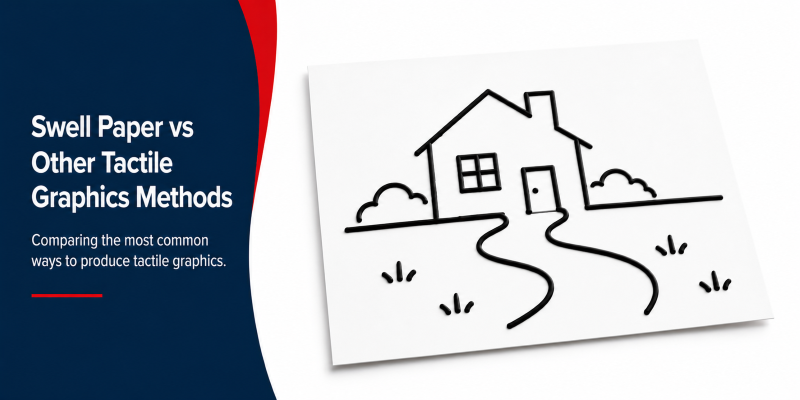
Swell paper is a type of microcapsule paper designed to create tactile graphics through heat activation. When black ink is printed or drawn onto the paper and passed through a tactile graphics machine, the dark areas expand to form raised lines and shapes.
This process allows tactile graphics to be produced quickly and consistently from digital files or hand-drawn designs.
Learn more about swell paper.
Other Common Methods for Creating Tactile Graphics
Thermoform Machines
The Thermoform machine, often called the Brailon Duplicator, EZ-Form or Maxi-Form, is a process used to create durable tactile graphics by forming heated plastic (Brailon)over a master mold. It is typically inexpensive to use and commonly used in higher-volume production environments where long-lasting materials are required.
While these machines produce durable results, it requires additional setup time and preparation of master copies.
Embossers
Embossing is often used for braille and simple tactile elements. It creates dots directly onto paper or other materials.
This method is precise and well-suited for text, but it can be limited when producing more complex tactile graphics.
Manual and Craft-Based Methods
Tactile graphics can also be created using materials such as glue, yarn, textured fabrics, cardboard, etc. These methods are often used at home and in classrooms for demonstrations or custom teaching aids.
While flexible and creative, manual methods can be time-consuming and may lack consistency.
Key Differences Between Methods
Each tactile graphics method varies in terms of speed, consistency, durability, and ease of use.
- Swell paper allows for fast, on-demand production with consistent results
- Thermoform Machines provide durability for high-volume or long-term use
- Embossers are best suited for braille and simple tactile elements
- Manual methods offer flexibility but require more time and effort
Choosing the right method depends on the specific needs of the user and the intended application.
When to Use Each Method
Different environments call for different approaches.
Swell paper is widely used in classrooms and accessibility programs where tactile graphics need to be created quickly and updated frequently.
Thermoform machines are often used when cost and durability are priorities, such as in libraries or shared educational resources.
Embossers are commonly used for braille and labeling, while manual methods are useful for hands-on learning and creative applications.
Why Swell Paper Is Widely Used
Swell Touch paper has become one of the most widely used methods for creating tactile graphics due to its balance of speed, accuracy, and ease of use.
It allows users to produce tactile graphics directly from printed or hand-drawn designs without the need for molds or complex preparation. This makes it particularly effective for educational environments where flexibility and efficiency are important.
When combined with a Swell Form Pro machine, it can also support higher-volume production needs.
Conclusion
There are many ways to create tactile graphics, each suited to different applications and environments.
By understanding the strengths of each method, educators and organizations can select the most appropriate approach for their needs. Among these options, swell paper continues to be a widely used and practical solution for producing tactile graphics quickly, reliably, and effectively.