How to Create Tactile Graphics (Step-by-Step)
Creating tactile graphics is a fast and effective way to make visual information accessible for individuals who are blind or visually impaired. With the right tools and methods, tactile graphics can represent shapes, layouts, data, and concepts through touch.
There are several ways to create tactile graphics, including, but not limited to, thermoforming, embossing, and swell paper. Each method has its place, but many educators and organizations prefer swell paper because it is fast, flexible, and easy to use in both classroom and production environments.
Step 1: Create or Choose Your Graphic
Start by designing or selecting the graphic you want to convert into a tactile format.
This can include:
- Maps
- Charts and graphs
- Shapes and diagrams
- Educational illustrations
You can create your own designs or use ready-made resources such as the Tactile Library, which offers downloadable tactile graphics.
Step 2: Print or Draw the Graphic
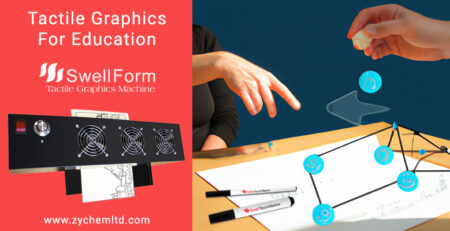
Next, transfer the design onto Swell Touch paper.
You can do this in two ways:
- Print using a standard inkjet or laser printer
- Draw directly using specialized black markers
The key is to use black ink, as it reacts to heat in the next step. Colors can be added, but they will not swell.
Step 3: Process the Graphic
If using swell paper, place the printed or drawn sheet into a Swell Form machine or Swell Form Pro machine.
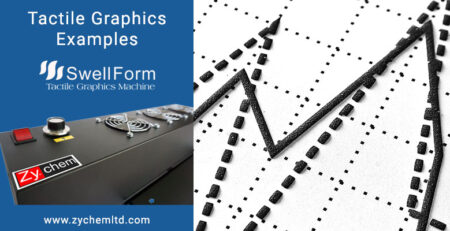
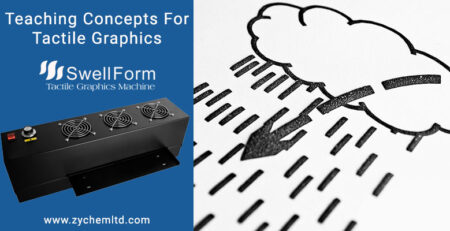
The machine applies controlled heat, causing the black areas to expand and form raised tactile graphics. This process takes only a few seconds and produces consistent results.
Other methods, such as thermoforming or embossing, may require molds, additional tooling, or more setup time. While effective in certain applications, these methods are typically less flexible for on-demand creation.
Step 4: Review and Use the Tactile Graphic
Once processed, the tactile graphic is ready to use.
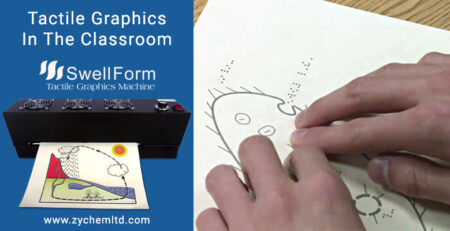
Run your fingers over the surface to ensure clarity and consistency. The raised areas should be able to be distinguished and interpreted through touch.
Why Swell Paper Is Widely Used
Among the available methods, swell paper is widely used because it allows tactile graphics to be created quickly and on demand.
This approach is:
- Fast
- Consistent
- Easy to use
- Ideal for both classrooms and production environments
For higher-volume environments, the Swell Form Pro machine provides increased efficiency and output.
Conclusion
Tactile graphics can be created using several different methods, each suited to specific needs and environments.
By combining tactile graphics with modern tools like Swell Touch paper, Swell Form and Swell Form Pro machines, educators and organizations can produce accessible materials quickly, efficiently, and at scale.