Braille and Tactile Graphics in Education
Including tactile graphics in braille materials has significantly expanded educational opportunities for individuals who are blind or visually impaired. Together, braille and tactile graphics provide a more complete and accessible way to understand both written and visual information.
Braille, a system of raised dots representing letters and numbers, is a foundational component of tactile learning. It gives individuals access to written language, enabling them to read, write, and engage with information independently.
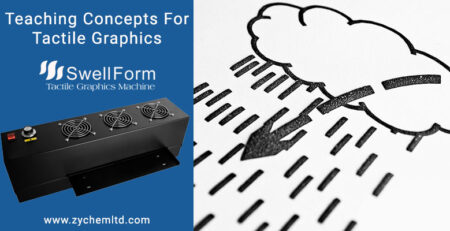
Tactile graphics complement braille by representing visual information—such as maps, charts, and illustrations—through raised lines, shapes, and textures that can be explored through touch.
Braille plays a critical role in literacy and independence. Learning braille allows students to access textbooks, navigate everyday environments, and communicate effectively. From reading classroom materials to identifying elevator buttons or using an ATM, braille supports real-world independence and confidence.
For many individuals, braille literacy is essential for pursuing higher education and professional careers. It promotes self-advocacy, increases access to information, and empowers individuals to fully participate in society.
Tactile graphics enhance this experience by adding context and depth to written content. While braille communicates words, tactile graphics communicate structure, relationships, and spatial information. This combination allows learners to build a more complete understanding of complex topics.
For example, in a science lesson about molecules, a sighted student can read text and view an image of the molecular structure. A student who is blind can read the braille description, but when paired with a tactile graphic of that structure, they gain a clearer and more meaningful understanding through touch.
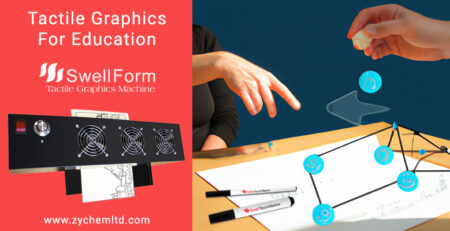
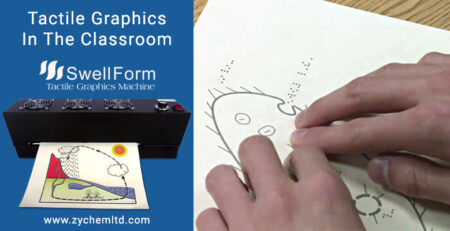
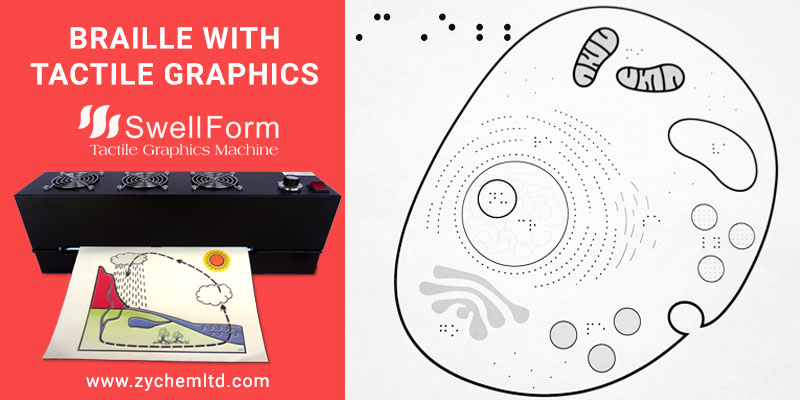
Modern tools have made creating tactile graphics faster and more accessible than ever. Using solutions like swell paper and a Swell Form machine, educators can quickly produce tactile graphics by printing black ink designs that expand when exposed to heat. This allows for on-demand creation of detailed, consistent tactile materials in the classroom.
While Swell Form machines do not produce traditional embossed braille, they can still produce raised black dots on the swell paper. These dots raise to create readable tactile elements that can supplement braille descriptions. However, it is important to note that the swell paper braille will differ from standard braille in spacing and precision. Swell paper braille is not meant to be used for pages of braille, but simply for a label of what the graphic may be depicting.
By combining braille with tactile graphics, educators can deliver a more inclusive learning experience. Braille provides access to language, while tactile graphics provide access to visual concepts. Together, they form a powerful educational framework that supports comprehension, independence, and accessibility.