Tactile Learning vs Auditory Learning
Tactile learning and auditory learning are two distinct approaches to how individuals absorb and understand information. While both play important roles in education, they differ significantly in how information is delivered and processed.
Tactile learning, often associated with kinesthetic learning, involves using the sense of touch and physical interaction to explore and understand concepts. Auditory learning, on the other hand, relies on listening to spoken information such as lectures, discussions, or audio content.
Understanding the differences between these learning styles is especially important when developing inclusive learning environments, particularly for individuals who are blind or visually impaired.
What Is Tactile Learning?
Tactile learning involves engaging with physical materials to gain understanding.
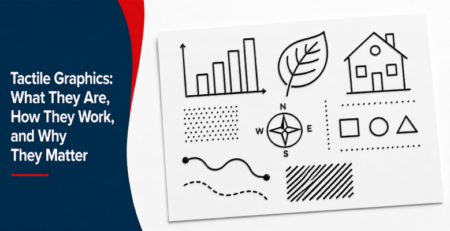
Learners interact with objects, textures, and structures, allowing them to explore shapes, relationships, and spatial concepts through touch. Tools such as braille and tactile graphics are especially effective, as they translate visual information into a tactile format that can be explored with the hands.
Tactile learning supports:
- Spatial understanding
- Sensory integration
- Fine motor skill development
- Long-term retention through physical interaction
This makes it particularly valuable for both kinesthetic learners and individuals who rely on touch as a primary way of accessing information.
What Is Auditory Learning?
Auditory learning focuses on absorbing information through hearing.
This includes listening to lectures, participating in discussions, and engaging with spoken explanations. Learners who prefer this style often excel in language-based tasks and benefit from verbal instruction and repetition.
Auditory learning supports:
- Listening comprehension
- Verbal communication
- Language development
However, it relies heavily on the ability to process and retain spoken information.
Key Differences Between Tactile and Auditory Learning
The primary difference between tactile and auditory learning lies in how information is experienced.
Tactile learning is active and hands-on, requiring physical interaction with materials. Auditory learning is more passive, relying on listening and interpretation.
For many concepts—especially those involving space, structure, or relationships—tactile learning provides a clearer and more intuitive understanding than auditory explanation alone.
Why Tactile Learning Is Essential for the Blind
For individuals who are blind or visually impaired, tactile learning is not just beneficial—it is essential.
While auditory learning can provide access to spoken information, it cannot fully replace the understanding gained through touch. Concepts such as maps, shapes, graphs, and spatial relationships require physical exploration to be fully understood.
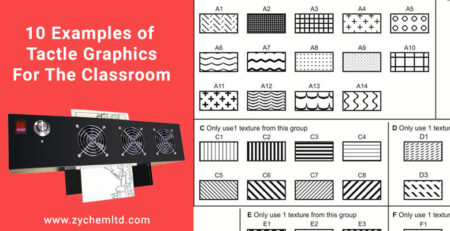
Using tools like tactile graphics, learners can access information that would otherwise be visual. These materials allow users to explore structure, layout, and relationships in a meaningful way.
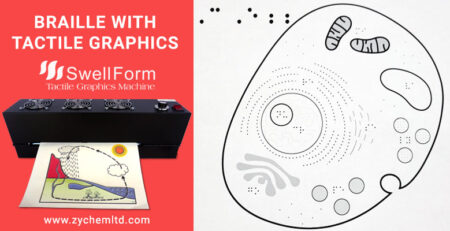
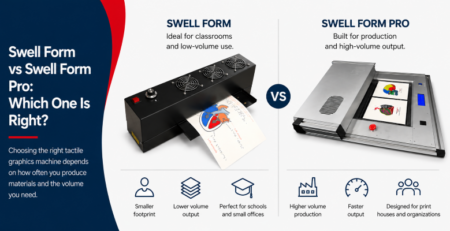
Educators can create these materials quickly using swell paper. By printing or drawing designs onto Swell Touch paper and processing them through a Swell Form machine, tactile graphics can be produced on demand for classroom use.
Finding the Right Balance
Both tactile and auditory learning have a place in education.
Auditory learning is useful for conveying explanations, storytelling, and language-based content. Tactile learning is critical for understanding structure, relationships, and physical concepts.
For the most effective learning experience, especially in inclusive classrooms, these methods should be used together. However, for individuals who are blind or visually impaired, tactile learning plays a central role in ensuring full access to information.
Conclusion
Tactile and auditory learning each offer unique benefits, but they serve different purposes.
Tactile learning provides hands-on interaction and deeper understanding, while auditory learning supports communication and verbal comprehension. By combining both approaches—and incorporating tools like tactile graphics, Swell Touch paper and Swell Form machines—educators can create more effective and inclusive learning environments.